

Cart
0
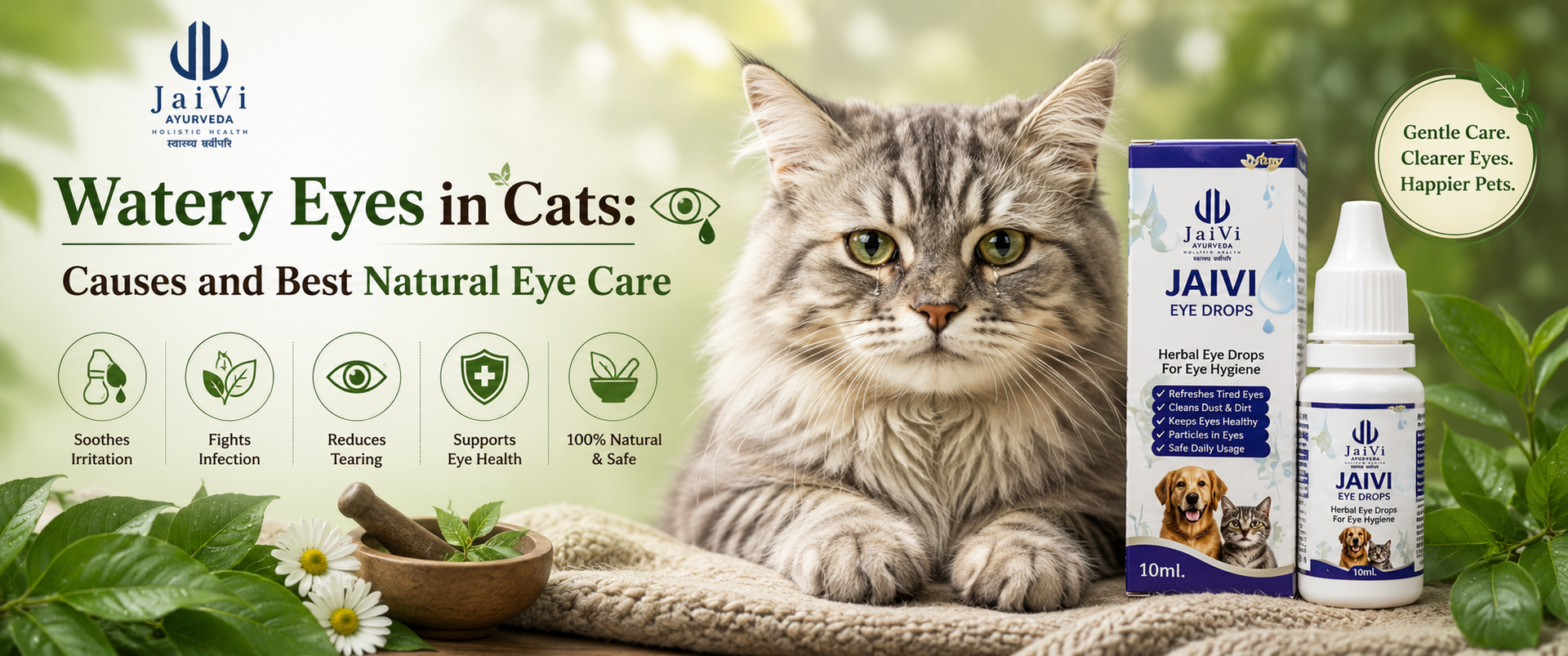
If you've noticed tears constantly collecting around your cat's eyes, or you're wiping away discharge more often than usual, you're probably wondering if it's something serious. While occasional tearing can be normal, persistent watery eyes in cats may indicate irritation, environmental factors, or an underlying health issue that deserves attention.
The good news is that not every case is an emergency. Knowing what causes watery eyes, when home care is appropriate, and when it's time to visit a veterinarian can help you protect your cat's eye health.
In this guide, we'll explore the most common causes of watery eyes, simple care tips, and how gentle herbal eye care products can support everyday eye hygiene.
Why Do Cats Get Watery Eyes?
A healthy eye naturally produces tears to keep its surface clean, moist, and protected. Normally, these tears drain through tiny tear ducts located near the inner corners of the eyes.
When tear production increases or drainage is affected, tears may overflow onto the face, causing visible staining or damp fur beneath the eyes.
Understanding the reason behind excessive tearing is the first step toward choosing the right care.
Common Causes of Watery Eyes in Cats
Several factors can lead to increased tearing or eye irritation.
Allergies
Dust, pollen, smoke, household cleaning products, or perfumes may irritate sensitive eyes, leading to increased tear production.
Minor Eye Irritation
A small particle of dust, loose fur, or environmental debris can temporarily irritate the eye.
Mild Eye Infections
Some cases of cat eye infection begin with redness, irritation, and increased tearing. A veterinarian should always evaluate suspected infections before treatment.
Blocked Tear Ducts
If tears cannot drain properly, they may overflow and create constant moisture around the eyes.
Breed Predisposition
Flat-faced breeds such as Persians and Exotic Shorthairs commonly experience watery eyes because of their facial structure and tear drainage.
Environmental Factors
Wind, dry air, air conditioning, or smoke exposure can sometimes make the eyes water more than usual.
Is Eye Discharge Normal?
Small amounts of clear discharge after sleeping are usually harmless.
However, understanding cat eye discharge causes can help you recognise when something may require medical attention.
Seek veterinary advice if you notice:
-
Thick yellow or green discharge
-
Blood in the discharge
-
Swollen eyelids
-
Cloudiness over the eye
-
Persistent redness
-
Squinting
-
Your cat keeping one eye closed
These signs could indicate conditions that require professional diagnosis and treatment.
When Can You Manage Eye Care at Home?
Supportive home care may be appropriate if:
-
The tearing is mild.
-
The discharge is clear.
-
Your cat is behaving normally.
-
There is no swelling.
-
The eye remains open comfortably.
Gentle cleaning and regular observation are often enough for minor irritation.
However, if symptoms worsen or continue for more than a day or two, consult your veterinarian.
When Should You Visit the Veterinarian?
Eye problems can progress quickly, so prompt evaluation is important if your cat has:
-
Thick or coloured discharge
-
Significant redness
-
Swollen eyelids
-
Eye injuries
-
Severe squinting
-
Loss of vision
-
Constant pawing at the eye
-
Pain when the eye is touched
Professional examination helps identify the exact cause and ensures appropriate treatment.
How Natural Eye Drops Help Support Eye Hygiene
Maintaining clean, comfortable eyes is an important part of your cat's overall health.
Quality cat eye drops can help:
-
Gently cleanse the eye area
-
Remove dust and debris
-
Support daily eye hygiene
-
Soothe minor irritation
-
Help maintain moisture on the eye surface
It's important to remember that supportive eye care products are not a replacement for prescription medication when a veterinarian diagnoses an infection or another eye disease.
Eye Care Can Be Challenging in Cats
Unlike many dogs, cats are often less cooperative when it comes to eye care. A calm, patient approach makes the process much easier.
Here are a few helpful tips:
-
Choose a quiet room without distractions.
-
Wrap your cat gently in a towel if needed.
-
Ask another person to help hold your cat if necessary.
-
Reward your cat with praise or a treat after each application.
-
Never force your cat if it becomes extremely stressed.
Making eye care a calm experience helps reduce anxiety over time.
How to Apply Eye Drops Safely
Proper application improves both comfort and hygiene.
Step 1: Wash Your Hands
Always wash your hands before handling your cat's eyes.
Step 2: Clean Around the Eyes
Use a soft, damp cotton pad to gently remove any visible debris.
Step 3: Hold Your Cat Comfortably
Support your cat's head without putting pressure on the neck.
Step 4: Apply the Drops
Follow the instructions on the product label and avoid touching the bottle tip directly to the eye.
Step 5: Allow Your Cat to Blink
Blinking naturally spreads the solution across the surface of the eye.
Supporting Everyday Eye Health
Simple habits can help keep your cat's eyes healthy.
These include:
-
Keeping bedding clean
-
Reducing dust indoors
-
Grooming long facial hair around the eyes
-
Feeding a balanced diet
-
Scheduling routine veterinary check-ups
-
Watching for changes in eye appearance
Preventive care often reduces the risk of ongoing eye irritation.
How Jaivi Ayurveda Eye Drops for Cats Support Eye Care
Jaivi Ayurveda's Eye Drops for Cats are formulated with herbal ingredients selected to support routine eye hygiene and comfort.
They are designed to:
-
Help maintain clean eyes
-
Gently remove surface impurities
-
Support eye comfort
-
Promote overall eye hygiene as part of regular care
They are intended as supportive eye care and should not replace veterinary treatment for infections, injuries, or other serious eye conditions.
Final Thoughts
Occasional tearing is common, but persistent watery eyes in cats should never be ignored. Understanding the cause, recognising warning signs, and providing appropriate care can help keep your cat's eyes healthy and comfortable.
For routine eye hygiene and gentle daily care, Jaivi Ayurveda's Eye Drops for Cats can be a useful addition to your cat's grooming routine. Combined with regular veterinary check-ups and prompt attention when symptoms worsen, they help support long-term eye health.
FAQs
1. Why does my cat have watery eyes all the time?
Persistent watery eyes may be caused by allergies, minor irritation, blocked tear ducts, breed-related anatomy, or underlying eye conditions. A veterinarian can determine the exact cause if the problem continues.
2. When should I worry about watery eyes in my cat?
You should seek veterinary care if watery eyes are accompanied by swelling, thick yellow or green discharge, redness, cloudiness, squinting, pain, or changes in vision.
3. Can Jaivi Ayurveda Eye Drops for Cats be used for daily eye care?
Yes. They are formulated to support routine eye hygiene and help keep your cat's eyes clean as part of regular grooming.
4. Will these eye drops treat an eye infection?
No. The drops are intended for supportive eye hygiene. If your veterinarian diagnoses an infection or another eye disease, follow the prescribed treatment plan.
5. How do I apply eye drops if my cat won't stay still?
Choose a calm environment, gently wrap your cat in a towel if needed, and ask someone to assist. Applying the drops quickly and rewarding your cat afterwards often makes future applications easier.
6. Can Persian cats have watery eyes more often than other breeds?
Yes. Flat-faced breeds like Persians commonly experience increased tearing because their facial structure affects normal tear drainage.
7. How often should I clean my cat's eyes?
The frequency depends on your cat's needs. Cats prone to tear staining or mild eye discharge may benefit from regular gentle cleaning as advised by your veterinarian or according to the product instructions.
8. Can I use human eye drops on my cat?
No. Human eye drops may contain ingredients that are not suitable for cats. Always use products specifically formulated for feline use or those recommended by your veterinarian.


